NeoBuddy
Featured digital assistant for unit-specific orientation information and resource navigation.
2026 Staff Onboarding
Onboarding video
Video guidance for weekend, on-call, and unit workflow orientation.
Digital infrastructure
NeoBuddy, the Resource Hub, and structured handover tools are integrated to provide timely access to unit-specific information, support clinical preparedness, and strengthen continuity, accountability, and safe neonatal care.
Featured digital assistant for unit-specific orientation information and resource navigation.
Centralised access to essential orientation documents and departmental resources.
Structured communication supports continuity, accountability, and safe neonatal care.
Clinical identity
This visual banner can use the heartbeat artwork as the site’s signature image while maintaining a professional clinical tone.
Featured chatbot
NeoBuddy is a featured component of the MG Nursery digital orientation ecosystem. NeoBuddy provides rapid, unit-specific orientation support, helping with navigation, common questions, and practical guidance while reinforcing that formal protocols, the Neonatal Guide app, and senior assistance remain the definitive sources for safe clinical decision-making.
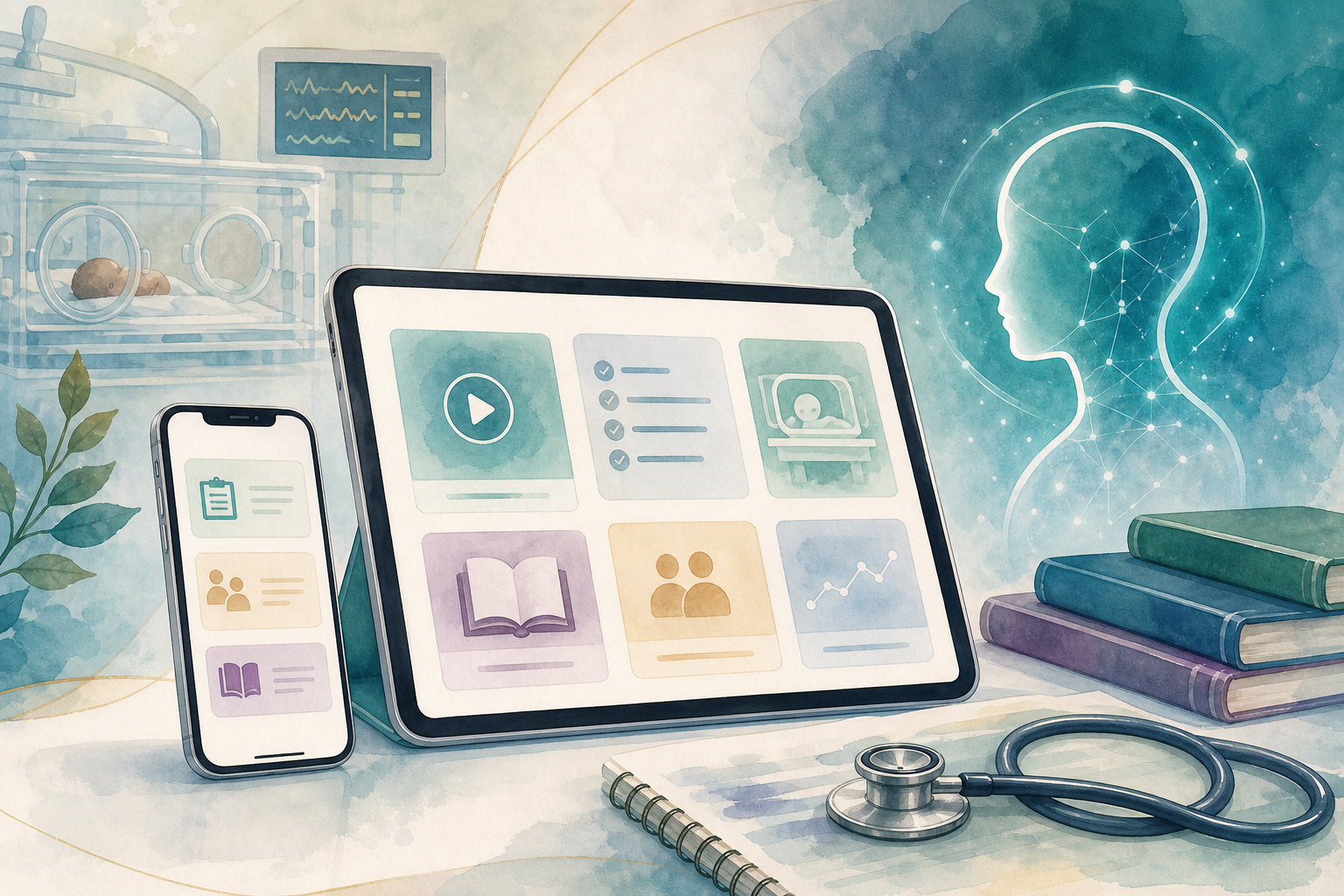
The Resource Hub, NeoBuddy, orientation videos, roster, Zoom meeting link, timesheets, and digital resources are organised to support efficient access on mobile and desktop devices.

Hand hygiene, bare-below-elbows practice, nail polish policy, and safe neonatal care standards.

Use SBAR, protect handover quality, escalate early, and seek senior clinical support appropriately.
Orientation overview
Transitioning into a new clinical service requires structured orientation to the relevant governance frameworks, clinical expectations, communication systems, and operational workflows. This digital resource has been developed to support new staff by consolidating the essential information required for safe, professional, and effective participation in the neonatal unit.
New staff are not expected to navigate the clinical environment, governance structures, digital systems, or learning requirements without guidance. Orientation provides a structured transition into the neonatal unit and clarifies the expectations that support professional practice.
Staff are expected to adhere to MGN governance principles, including appropriate communication channels and established clinical protocols. These structures promote safe care, professional accountability, and consistent clinical governance.
Early clarification is encouraged. Respectful, timely communication supports patient safety, professional development, and a constructive clinical learning environment.
Digital orientation resources
The unit's digital platforms, clinical tools, communication channels, staff forms, rosters, academic resources, and administrative documents are consolidated here to support coherent access and standardised onboarding. The full searchable directory below retains the complete resource set for ongoing reference.
Central platform for orientation materials, unit policies, governance guidance, and practical resources.
Access Digital HubPrimary welcome page for new staff, introducing the MG Nursery orientation pathway and key starting resources.
Open welcome pageRole-specific objectives, training requirements, and reference materials structured by staff category.
Access flipbookDepartmental staff information and biographical sketch resources.
View team profilesForm for submitting staff profile information for the departmental website.
Access formStaff details page for submitting onboarding information and contact details for departmental records.
Add your detailsEvidence-informed neonatal guideline and drug-dose application for clinical reference.
App Store | Google PlayClinical tool for low-risk baby clinic follow-up planning and navigation.
Access follow-up toolCoded employee timesheet for documenting working hours and overtime.
Access timesheetThe roster is available through a protected link. Users will need to request access as part of standard safety and governance requirements.
Access rosterWeekday virtual handover at 08:00. Meeting ID: 851 7883 9115. Passcode: MGN.
Join ZoomPostgraduate academic and research support, including MMed and MPhil guidance, research processes, funding mechanisms, and academic governance.
Access research website | Open research botSearchable full directory of orientation, clinical, academic, communication, roster, and administrative resources.
Open full directoryClinical team
The MG Neonatal Unit functions as a multidisciplinary clinical and academic environment, with consultants, fellows, medical officers, registrars, rotating doctors, students, and allied colleagues contributing to patient care, training, and governance.
The consultant team includes Shakti Pillay, Lloyd Tooke, Alan Horn, Yaseen Joolay, and Michael Harrison. Senior registrars include Yolanda Nkanuka, Chinelo Obiora-Izuka, Naa Djama Glover, Bruktawit Kebede and Yabwile Mulambia Jemu. Candice Nelson is a senior medical officer at MGN.
The team includes medical officers Juhi Maharaj, Shannon Harries, and Gabriella Urdang. Paediatric registrars, interns, and medical students rotate through the unit.
Infection prevention and control
Infection prevention and control is a critical component of neonatal practice. Staff must review the relevant guidance before clinical work, remove nail polish, and adhere to hand hygiene and bare-below-elbows standards at all times.
Teamwork and escalation
Effective neonatal care depends on multidisciplinary teamwork, structured communication, and early escalation. Clinical workload must not compromise patient safety. Staff should use SBAR, seek assistance early, and inform the on-call consultant when additional support is required.
Orientation framework
The orientation content has been reorganised into formal domains to support clarity, retrieval, and implementation. The digital resource directory remains available below for direct access to key links.
Welcome to MGN. Internship marks two years of significant growth, transitions, and rewards. The shift from medical school to registered doctor, while exciting, can feel overwhelming.
For registrars, medical officers, fellows, students, and other rotating staff, this digital ecosystem provides a consolidated overview of the unit's governance structures, communication processes, clinical expectations, and digital platforms that support safe and effective practice within the neonatal unit.
We are committed to welcoming all new staff as integral members of the team. Adhering to MGN governance principles, including appropriate communication channels, infection prevention and control, and clinical protocols, provides structure and protects you as a junior doctor while supporting safe neonatal care.
Our goal is to help all staff meet their clinical objectives in a supportive environment while building capable, resilient professionals who are passionate about their work. Meeting your training needs is our responsibility, so please reach out with questions. With time and practice, you will find your footing.
Wi-Fi is coordinated for all new staff as all orientation and governance resources are digital. Staff should use a UCT email address to access Eduroam on personal devices, which MGN facilitates.
The unit promotes open, respectful communication and maintains an open-door policy. Confidential discussions and debriefing can be arranged with senior staff. Staff should engage early if clinical, interpersonal, or other challenges arise.
Respect And Conduct. MG Neonatal Unit maintains a zero-tolerance approach to bullying and is committed to fairness, kindness, and inclusivity for all staff, babies, and families. Each team member has clearly defined roles and is respected as an accountable professional; these roles provide structure rather than hierarchy. All interactions must remain respectful and professional; demeaning or dismissive behaviour is unacceptable. Constructive feedback must support learning, psychological safety, and mutual respect.
Raising Concerns And Support. Concerns regarding clinical performance or conduct should be raised through appropriate channels, namely a senior clinician or a designated line manager. The unit maintains an open-door policy; should you require a confidential discussion or debriefing, please approach any senior staff member. Engaging early supports timely resolution and a constructive working environment.
Punctuality And Handover. All staff are expected to be punctual. The clinical workday commences at 08:00, and all staff except the clinician allocated to theatre duties must be present and logged into handover before 08:00. The theatre clinician is excused from handover and must arrive ten minutes early to relieve their colleague and check the resuscitation trolley. If an emergency occurs close to handover, the day team assumes ongoing care so that handover proceeds without delay.
Infection prevention and control is a critical component of neonatal care. All staff are required to adhere strictly to these standards at all times.
Please remove all nail polish before your first day.
Standardised protocols are central to delivering safe, consistent, and high-quality neonatal care. They provide junior staff with clear guidance and support evidence-aligned decision-making at the point of care.
To improve access, I converted the Neonatal Guidelines and Drug Doses handbook into a dedicated clinical application, Neonatal Guide, available on the App Store and Google Play. The app is updated regularly to reflect emerging evidence and evolving best practice.
Clinical allocations are determined by staff tier, professional role, level of training, contractual requirements, and prescribed learning outcomes. Staff are expected to familiarise themselves with the different areas of the neonatal unit in which they may be allocated, and to understand how each area contributes to patient flow, clinical continuity, multidisciplinary coordination, and the broader operational workflow of the unit.
Working hours, commuted overtime, calls, and weekend duties are structured to support appropriate clinical exposure and progression of training within the neonatal unit. Although departmental working hours and rostered obligations are standardised, clinical responsibilities, levels of supervision, decision-making authority, and specific rostered duties may differ according to staff category, role expectations, contractual arrangements, and stage of training.
A paediatric registrar is on call every night. There is either one medical officer or one rotating doctor on call per night with a registrar.
Weekend and public holiday ward rounds require appropriate cover for the neonatal intensive care unit, High Care, postnates, theatre, and Pre-KMC/KMC. Weekend post-call arrangements aim to facilitate timely departure after clinical responsibilities have been completed. On weekdays, staff are not expected to stay post-call for rounds after the 08:00 handover.
At MGN, all staff have equivalent commuted overtime obligations, although their clinical roles and levels of responsibility may differ.
Assistance At Deliveries And Theatre Cover. A designated clinician is allocated to assist with complex deliveries and to support neonatal resuscitation during the golden minute. The purpose of additional assistance is to ensure that an appropriately skilled clinician is available and present before the baby is born, where specific risk factors indicate the need for additional support.
Junior staff are trained in neonatal resuscitation; additional assistance is therefore not required at every delivery and should be requested according to the specific indications set out in the Assistance at Deliveries guidance. Staff undertaking buddy calls on the paediatric roster will not cover theatre independently. If the team is unable to attend a high-risk delivery, or if workload or staffing pressures compromise safe clinical practice, the on-call consultant must be informed immediately.
Teamwork And Communication. Effective communication and timely escalation are essential to safe neonatal care, and workload pressures must be recognised early and addressed through appropriate senior support. If clinical demands exceed available capacity, or if attendance at a high-risk delivery may be delayed, the on-call consultant must be informed immediately. Requesting assistance reflects appropriate clinical judgement and professional responsibility, and patient safety remains the overriding priority.
For interns, neonatology is undertaken as a stand-alone rotation, distinct from the two-month general paediatrics placement.
All staff at MGN are subject to the applicable institutional, departmental, labour, and regulatory requirements governing leave, absenteeism, sick leave, and professional conduct. These requirements are applied consistently to promote fairness, continuity of care, and compliance with professional and institutional standards.
Leave, absenteeism, and sick leave must be managed through the appropriate departmental processes and in accordance with the unit's approved communication and escalation pathways. Staff who are unwell or unable to attend work must notify their designated supervisor and the appropriate clinical lead.
Attendance at meetings is expected unless a staff member is post-call, managing an emergency, resuscitating a baby, or involved in a delivery. Apologies should be provided to the meeting chair where possible.
For interns, logbooks and timesheets should be completed before leaving the department. Relevant staff resources under the Neonatal Digital Hub should be reviewed before presenting logbooks for sign-off.
Weekday handovers are conducted via Zoom at 08:00. Zoom handovers do not occur on weekends or public holidays. Staff should be identifiable and focus exclusively on handover.
SBAR should be used to support efficient clinical communication. Monday academic meetings take place at 12:30 in person in the Neonatal Department Committee Room. Other meetings include the alternate Tuesday joint obstetric and neonatal morbidity and mortality meeting and the Friday Executive Committee meeting.
Rosters at MGN are designed to be fair, aligned with training needs, and compliant with HPCSA stipulations. New staff employed at MGN are not allocated to call on day one.
Parking and access card information is addressed in the digital flipbook.
Resource links
All retained digital resource links are grouped by purpose for efficient navigation, ready access, and ongoing reference.